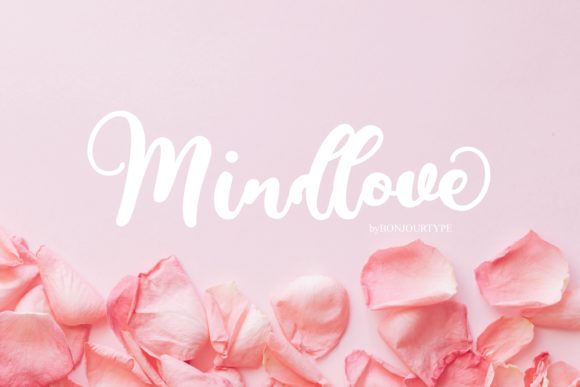
Mindlove Font for Web Design
Testing Mindlove in a hero section of a boutique online store, I was immediately drawn to its whimsical charm. This Script Handwritten font brings a sense of personality and elegance that feels both modern and timeless. As a web designer, I always look for fonts that can elevate a digital layout without overwhelming the user experience.
Mindlove for Creative Portfolio Websites
Using Mindlove as a headline font on a creative portfolio homepage added a unique touch that stood out from standard sans serif options. The elegant swashes and fluid curves gave the site a handcrafted feel, perfect for showcasing art, design, or personal branding. It worked especially well when paired with a clean, minimal background, allowing the font to breathe and command attention.
The PUA encoding made it easy to access all the glyphs and swashes, which was a relief when designing custom icons or decorative elements. For a digital product creator, this level of control is essential when building a cohesive brand identity.
Mindlove for Online Store Banners and Call-to-Action Buttons
When testing Mindlove on an online store banner, I noticed how it could be used effectively for short phrases like "Limited Edition" or "New Arrivals." The font’s flowing style added a sense of movement and excitement, making it ideal for promotional content. However, I also saw how it might not be the best choice for long paragraphs or body text due to its intricate details.
For call-to-action buttons, I found that using Mindlove in a smaller size with a solid background helped maintain readability. On mobile screens, the font’s legibility improved when contrasted against light or dark backgrounds, making it a versatile option for responsive designs.
Mindlove for Coaching and Course Landing Pages
On a coaching website, Mindlove served as a strong header font for course landing pages. Its playful yet professional tone aligned well with the brand’s message of inspiration and growth. When placed over an image banner, the font complemented the visual storytelling without competing with the background imagery.
I also experimented with using it for subheadings and section titles, where it provided a clear visual hierarchy. The font’s variety of swashes allowed for subtle variations in each heading, adding a personalized touch to the design.
Mindlove for Blog Headers and Social Media Graphics
For a blog redesign, I used Mindlove as the main header font. It brought a fresh, engaging energy to the site that felt more approachable than traditional serif or sans serif fonts. The font’s handwritten nature made the content feel more human, which is crucial for building trust with readers.
When creating social media graphics, I found that Mindlove worked well for short captions or quotes. Its elegant strokes added a touch of sophistication that elevated the overall aesthetic of the visuals. Pairing it with a simple sans serif for longer text helped balance the design and maintain clarity.
Mindlove for Digital Brand Kits and Campaign Landing Pages
As part of a digital brand kit, Mindlove became a key element in the logo design and stationery assets. Its versatility allowed it to be used across different formats, from business cards to email templates. The font’s unique character helped establish a distinct brand voice that felt both creative and professional.
On a campaign landing page, I used Mindlove for the primary headline and supporting text. The font’s flow and rhythm made the copy feel more dynamic, encouraging users to engage with the content. It also worked well when combined with bold color contrasts, enhancing the visual impact of the page.
Mindlove for Website Headers and Section Headings
When implementing Mindlove on a website header, I focused on keeping the text concise to preserve readability. Using it for section headings provided a clear visual structure while maintaining a sense of creativity. The font’s swashes added a softness that balanced the more rigid elements of the layout.
I also tested it on mobile layouts, where I adjusted the font size and spacing to ensure it remained legible. The results were positive—Mindlove maintained its charm without sacrificing usability, making it a reliable choice for responsive web design.
Mindlove for Display Typography and Decorative Accents
Mindlove excelled as a display font for decorative accents, such as icons, banners, or special event announcements. Its intricate details made it perfect for one-off design elements that needed to stand out. When used sparingly, it added a layer of sophistication that enhanced the overall aesthetic of the site.
However, I learned that overusing the font could lead to visual clutter. It’s best reserved for key areas where it can make the biggest impact, rather than being applied throughout the entire layout.
Mindlove for Webfont Availability and Commercial Licensing
Before finalizing the use of Mindlove on a client project, I checked its webfont availability and commercial licensing. The font came with multiple file formats, making it easy to integrate into different platforms. Its PUA encoding ensured full access to all glyphs, which was important for custom design work.
For designers working on client websites or online stores, having a font that is both visually appealing and legally sound is essential. Mindlove met these requirements, offering flexibility without compromising on quality or compliance.